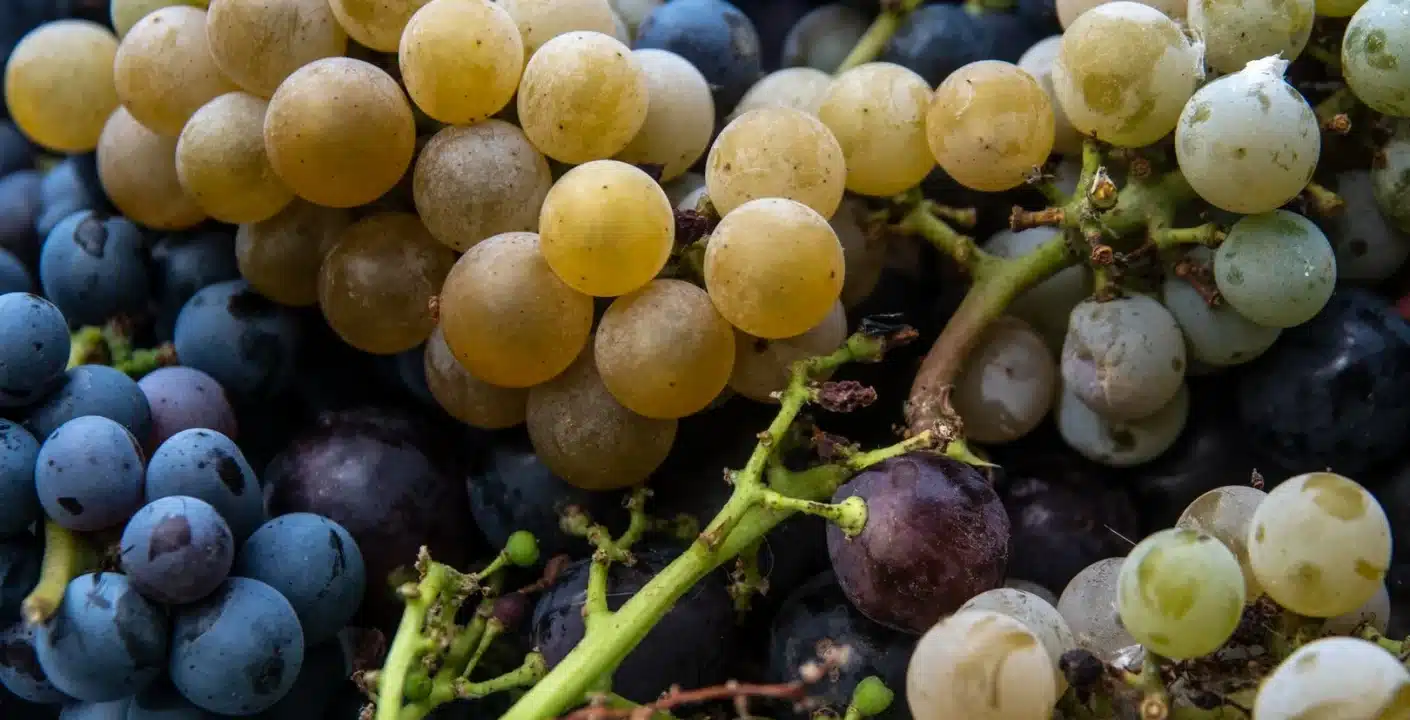
With over 30 years of combined experience in viticulture and the wine trade, Bourgogne Select invites you to discover the most emblematic grape varieties of the French regions, real keys to understanding wine and its terroirs
What is a grape variety? Understanding the basics of wine
Definition, role and influence in wine
The grape variety refers to the grape variety used to make a wine. Each grape variety has its own characteristics: cluster shapes, skin thickness, sugar or acidity levels. However, beyond just the variety, the grape variety plays an essential role in the wine. It directly influences the aromatic profile, mouthfeel, and ageing potential. Pinot Black will give, for example, fine and elegant wines, while a Cabernet Sauvignon will offer more structured and powerful wines. The grape variety is therefore one of the fundamental elements that allow us to understand the style of a wine, just like the terroir, the climate, or even the winemaker's savoir-faire.
Difference between grape variety and appellation
It is common to confuse grape variety and appellation, even though they are two distinct concepts. The grape variety corresponds to the type of grape used, whereas the appellation designates a precise geographical area, governed by a strict set of regulations (AOC, AOP). In France, wines are predominantly identified by their appellation rather than their grape variety. Thus, a wine from Burgundy will often come from Pinot Black or Chardonnay, without this always being mentioned on the label. Conversely, in other countries such as the United States or Australia, the grape variety is generally highlighted. Understanding this difference allows you to better read a label and anticipate the style of wine you are about to to taste.
History of grape varieties: a unique wine heritage
From ancient origins to their selection
The culture of Vineyards in France It dates back to Antiquity, introduced by the Greeks and then extensively developed by the Romans. From that era, certain grape varieties were selected for their ability to adapt to climates and produce quality wines.
Over the centuries, many grape varieties have emerged, evolved… or disappeared. Ancient varieties now forgotten, such as the Gouais blanc, ancestor of many modern grape varieties, or even the Savagnin, which are at the origin of several lineages, have played a key role in wine history. Other rarer grape varieties, sometimes abandoned or marginalised, bear witness to this constantly evolving ampelographical richness.
Through observation and experience, the winegrowers have progressively refined their selection, keeping the most qualitative grape varieties best suited to their environment and their region.
And so, the great ones were born grape varieties that we know today, resulting from a long process of natural and human selection.
The role of monks and the influence of terroirs
During the Middle Ages, monks played a fundamental role in the structuring of French vineyard, particularly in Burgundy. Patient and rigorous, they observed the soils, aspects, and climatic conditions in order to identify the most suitable plots for Vine cultivation.
Their work made it possible to lay the groundwork for the notion of terroir, today essential in the world of wine. They understood that the same grape variety, cultivated on different soils, could produce wines with very distinct profiles.
And Burgundy, this approach has given rise to the unique notion of “terroir”, where each plot is precisely defined and valued. The grape variety then becomes a true indicator of its place of cultivation, subtly translating the identity of each location.
The modern evolution of French grape varieties
From the 19th century onwards, France's vineyards underwent a major upheaval with the phylloxera crisis, which destroys a large part of the vines. This period marks a decisive turning point, leading to the replanting of the vineyard and a more rigorous selection of grape varieties.
It is also at this time that the system of gradually takes shape appellations, strengthening the bond between grape variety, terroir and geographical origin. Today, the French grape varieties continuing to evolve, balancing respect for traditions with adaptation to contemporary challenges, particularly climate change. Some ancient grape varieties are even being rediscovered, while others are being studied for their resistance and ability to adapt to new conditions.
This permanent evolution testifies to the richness and diversity of French wine heritage, across its regions.
The main red grape varieties
The red grape varieties in France offering a wide diversity of styles, ranging from light and fruity wines to more powerful and structured wines, each reflecting its terroir and identity.
Pinot Black
Its aromatic profile is characterised by notes of red fruits such as cherry, raspberry or redcurrant, which can develop over time into more complex aromas of undergrowth, spices or leather. Pinot Noir adapts particularly well to temperate climates and chalky soils, allowing it to reveal the full subtlety of its environment.
In Burgundy, it is at the heart of the greatest wines, where each plot - or “climat” - expresses a unique identity. Both accessible in its youth and capable of great ageing potential, Pinot Noir seduces enthusiasts and connoisseurs alike in search of elegant and refined wines.
Gamay
It stands out for its freshness and its intense aromatic expression, dominated by notes of crunchy red fruits such as strawberry, cherry or raspberry, sometimes accompanied by floral nuances.
Low in tannins, it produces supple and easy-drinking wines, perfect for a convivial tasting. Grown mainly on granitic soils, Gamay reveals its full personality in the Beaujolais crus, where it can gain complexity and structure, while retaining its fruity character.
Often appreciated in its youth for its lively and expressive character, Gamay can also surprise with its ageing potential in certain appellations, then offering deeper and more elegant wines.
Merlot
Its aromatic profile is dominated by black berry notes such as plum, blackberry or blackcurrant, often accompanied by chocolatey or spicy nuances from ageing. More accessible than other more structured grape varieties, Merlot seduces with its balance and approachability, making it an excellent choice for discovering red wines.
Used alone or in blends, particularly with Cabernet Sauvignon, it brings fruitiness, roundness, and a pleasing richness, contributing to the harmony of many Bordeaux wines.
Cabernet Sauvignon
Its aromatic profile is characterised by intense notes of black berries such as blackcurrant and blackberry, often accompanied by vegetal (green pepper), spicy or woody nuances after ageing. A late-ripening grape variety, it thrives in warm climates and well-drained soils, which allow it to reach optimal maturity.
It is very often used in blends, particularly with Merlot, in order to bring structure, length and complexity to wines. More austere in its youth, Cabernet Sauvignon evolves over time towards more complex aromas, offering deep, elegant wines built for ageing.
Syrah
Its aromatic profile is marked by notes of black berries such as blackberry and blackcurrant, accompanied by typical spicy nuances, notably pepper, sometimes complemented by smoky or floral touches like violet. Very expressive, Syrah flourishes particularly in sunny climates, where it develops its full richness and complexity.
In the great Rhône appellations, it can produce wines for long ageing, powerful yet retaining a fine freshness. Both intense and refined, Syrah seduces lovers of characterful wines, in search of depth and aromatic expression.
Grenache
Its aromatic profile is dominated by notes of ripe red fruits such as strawberry and cherry, often evolving into aromas of candied fruits, sweet spices and sometimes garrigue.
Very well-suited to hot, dry climates, Grenache reveals its full expression in sunny growing conditions. It is often used in blends, particularly with Syrah, to bring aromatic richness, roundness and balance to wines.Accessible and expressive, Grenache charms with its convivial character and aromatic richness, perfectly embodying the spirit of southern wines.
The main white grape varieties
The White grape varieties in France reveal all the finesse and diversity of the vineyard, the purity of the Chardonnay to the aromatic intensity of Sauvignon White.
Chardonnay
Its aromas generally revolve around white-fleshed fruits such as apple or pear, with notes of citrus, white flowers, and sometimes butter, hazelnut, or vanilla depending on the aging. Chardonnay accurately reflects the soils on which it is grown.
In Burgundy, it reveals its full purity on limestone soils, offering wines of great elegance and beautiful tension. Both accessible and capable of producing exceptional wines, Chardonnay seduces as much by its freshness as by its complexity, making it an essential grape variety in the world of wine.
Sauvignon White
In certain environments, it can also develop highly sought-after mineral nuances. Sauvignon Blanc thrives in temperate climates that allow it to retain all its freshness and natural acidity.
It thus produces wines that are taut, elegant, and very refreshing. Easily recognisable and accessible, it seduces with its balance and liveliness, making it an ideal choice for lovers of fresh, aromatic white wines.
Chenin Blanc
Its aromatic profile is built around notes of apple, quince, honey and white flowers, with a pleasing evolution towards more complex aromas over time.
With its naturally high acidity, Chenin Blanc has excellent ageing potential, allowing it to develop depth and complexity over the years. Both lively, structured and elegant, Chenin appeals to enthusiasts looking for expressive and balanced white wines.
Riesling
Over time, it can develop more complex aromas, including mineral and slightly petrol notes, highly sought after by enthusiasts. With great natural acidity, Riesling produces taut, elegant wines that are particularly suited to ageing. It is often considered one of the grape varieties that best expresses its terroir, subtly revealing the soils on which it is cultivated.
Precise, refined, and expressive, Riesling, emblematic of Alsace, seduces white wine lovers seeking dry, mineral wines with an authentic character.
Viognier
Depending on its environment, it can also develop honeyed and spicy nuances. Less acidic than other grape varieties in the same range, Viognier offers round, rich, and enveloping wines, with a lovely texture on the palate.
It thrives particularly in warm climates, where it develops its full aromatic complexity. Both powerful and elegant, Viognier appeals to lovers of rich, generous wines with a touch of finesse.
Gewürztraminer
Often slightly yielding, it produces rich, generous and very fragrant wines. Less marked by acidity than other white grape varieties, Gewürztraminer seduces with its roundness and aromatic power. It flourishes particularly in cool to temperate climates, where it develops its full complexity.
Both original and intense, it is ideal for lovers of aromatic wines and is perfectly suited for pairings with spicy, exotic, or sweet-and-savoury dishes.
What grape varieties for rosé wines?
Much appreciated as soon as the good weather arrives, the rosé wine Seduced by its freshness, its lightness and its convivial character, it became a summer essential.
Red grape varieties used to make rosé wines
Contrary to popular belief, rosé wine is not from a mix of red wine and white wine, but rather from red grape varieties.
This is the duration of contact between the juice and the grape skin — called maceration — which determines the colour and style of the wine.
One maceration The maceration allows for this characteristic rosy hue to be obtained, while preserving the freshness and fruity aromas.
The main grape varieties used for rosé wines
Several red grape varieties are used to produce rosé wines, each bringing its own style and aromas:
- Grenache: fruity, round and luscious
- Cinsault: light, fresh and delicate
- Syrah: structured with spicy notes
- Mourvèdre: more powerful and complex
- Cabernet Sauvignon / Cabernet Franc: provide structure and intensity
- Gamay: Lively, fruity and approachable
This diversity allows for a wide spectrum of rosés to be produced, from the lightest to the most expressive.
Why the same grape variety can produce a red or rosé wine
The same grape variety can produce a red or rosé wine depending on the winemaking method used. For a red wine, maceration is prolonged, which allows for greater extraction of colour, tannins, and structure. Conversely, for a rosé, maceration is very short, resulting in a clearer, lighter wine with a focus on fruit. It is therefore the winemaker's work that determines the final style of the wine, far beyond the grape variety himself.
How to choose a wine?
Choosing a wine according to its grape variety is one of the simplest ways to find a wine that matches your tastes and desires.
Choosing a grape variety according to your tastes: light, fruity or powerful
Each grape variety has a well-defined style, which makes it easy to guide one's choice:
Do you like light and fruity wines?
Do you prefer rich and full-bodied wines?
Are you looking for powerful and structured wines?
By understanding each profile grape variety, it becomes easier to choose a wine that suits your preferences.
Choosing a wine by grape variety and food pairings
The grape variety also plays an essential role in agreements Food and wine, depending on its intensity and aromas.
Pinot Black
Cabernet Sauvignon
Chardonnay
Sauvignon White
Viognier
Riesling
Gewürztraminer
Pairing the grape variety with the dish allows us to enhance both the wine and the tasting.
Why are grape varieties essential to understanding wine?
The grape variety is one of the fundamental keys to understanding a wine, as it directly influences its style, aromas, and structure. Each grape variety has its own identity, which is found in the glass, from the finesse of a Pinot Black to the power of Cabernet Sauvignon.
But the grape variety never expresses itself alone. It is intimately linked to its region - the soil, the climate and the winemaker's savoir-faire — which come to modulate its expression. Thus, the same grape variety can produce very different wines depending on its origin.
Understanding grape varieties therefore allows you to anticipate the profile of a wine, refine your preferences and make more informed choices. It is a real landmark, both for amateurs and for enthusiasts wishing to deepen their knowledge. Wine knowledge.
Grape varieties for wines in France: the essentials for making the right choice with Bourgogne Select
Understand the Grape varieties, is to give yourself the keys to better appreciate, choose and discover the full richness of French vineyards. From great white grape varieties like Riesling to red grape varieties from Bordeaux and those used for rosé wines, each variety expresses a unique style, identity, and terroir. At Bourgogne Select, We carefully select wines that showcase these grape varieties and their authenticity, in order to offer you an experience true to the French art of living. All that remains is for you to explore, taste, and find the wines that match your desires.

 Français
 English (UK)
 简体中文
简体中文